Bedding & Sleep Comfort
Why Sleep and Beyond Wool Comforters Suit Moisture-Prone Sleepers
If a warm comforter leaves you feeling clammy rather than cozy, the answer may not be a thinner blanket alone. Wool’s ability to absorb and gradually release moisture makes it an intriguing option for sleepers who want warmth without the enveloping, lofty feel of down.
Published November 15, 2026
There is a particular kind of nighttime discomfort that has little to do with being too hot or too cold. You settle under the covers feeling fine, then wake later with a damp, overheated feeling that makes you kick off the comforter, only to reach for it again when the room cools. For people who experience those small temperature swings, bedding can make a meaningful difference to how comfortable the night feels.
Wool comforters offer one natural approach. Wool fibers can absorb moisture vapor and release it gradually, a property that may help the bedding feel less clammy as the sleeper and bedroom change temperature. They also provide insulation without necessarily creating the deep, puffy sensation associated with a lofty down comforter. The result is a different kind of coziness: warm, breathable, and often more softly draped than dramatically cloudlike.
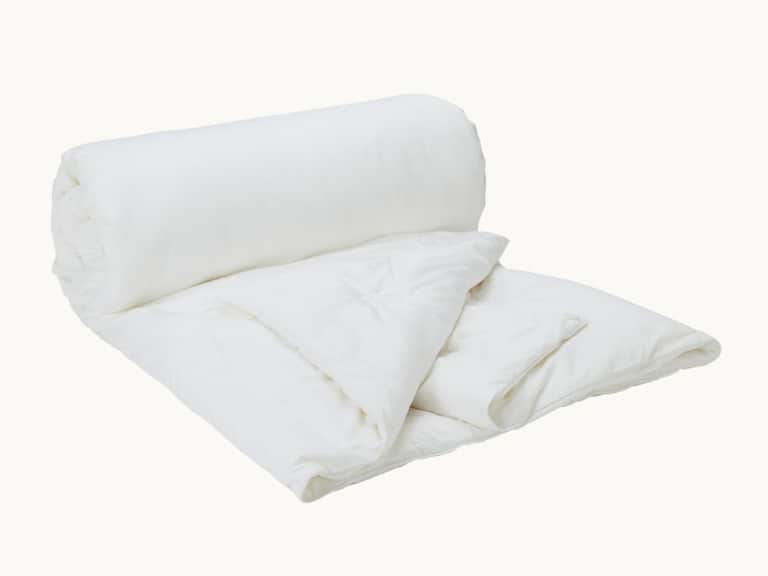
Sleep and Beyond’s myMerino comforter brings that idea into a familiar bedding format, pairing organic merino wool fill with a cotton cover. Its lighter version is designed for people who want a breathable layer and less insulation, including sleepers who tend to run warm. Understanding what wool can—and cannot—do helps you decide whether that style of comforter suits your habits, room, and preferred feel.
What makes wool different from down?
Down and wool both provide warmth, but they do so in different ways. Down consists of soft clusters that trap air, creating loft and insulation with relatively little weight. A down comforter can feel airy and lofty, with the fill held in stitched channels or boxes to keep it evenly distributed. Its warmth depends on factors including the amount and quality of fill, the construction, and the room’s temperature.
Wool batting is made from fibers arranged in a layer rather than from fluffy down clusters. A wool comforter may feel flatter, more substantial, or more evenly draped across the body. That doesn’t automatically make it heavy or hot: fill weight and construction matter. But people who dislike the pronounced loft of down may appreciate wool’s more grounded feel.
The key difference for moisture-prone sleepers is wool’s relationship with humidity. Wool fibers can take in water vapor from the surrounding air and later release it as conditions shift. That is not the same as making someone sweat less, and it does not guarantee that a person will remain dry or cool. Rather, it describes a material characteristic that can contribute to a more balanced-feeling sleep environment when combined with breathable bedding and a suitably cool room.
Down also has a role in temperature comfort: its loft traps air, and its breathability can help some sleepers stay comfortable. But people who prefer less loft, want a natural fill other than down, or find that their bedding feels too enveloping may want to compare wool rather than assume that one material works for everyone.
How moisture management works
During sleep, the body naturally releases heat and moisture. Some of that moisture enters the air as vapor before it becomes liquid sweat. Bedding materials differ in how they interact with that vapor and how quickly they let warmth and humidity move away from the body. Wool’s capacity to absorb and release moisture vapor is one reason it is often described as moisture-managing.
That phrase can sound like a promise of perfectly dry sleep, but it is better understood as a feature of the fiber rather than a guarantee about the sleeper. Your experience also depends on the room, mattress, sheets, pajamas, duvet cover, comforter weight, and personal temperature preferences. A thick comforter in a warm bedroom can still feel too warm, whether its fill is wool, down, or another material.
Think of the bedding as part of a small climate system. The comforter’s job is to provide an appropriate amount of insulation while allowing the bed to feel comfortable as conditions change. Wool may be appealing if you want a layer that combines warmth with moisture handling, but choosing a lighter fill weight and breathable surrounding layers is just as important as choosing the fiber.
People with persistent night sweats or sleep disruption should also consider broader causes, including room conditions and health factors. Bedding can help shape comfort, but it is not a treatment for a medical concern. If sweating is new, severe, or accompanied by other symptoms, it is sensible to seek guidance from a qualified health professional.
A closer look at Sleep and Beyond’s myMerino
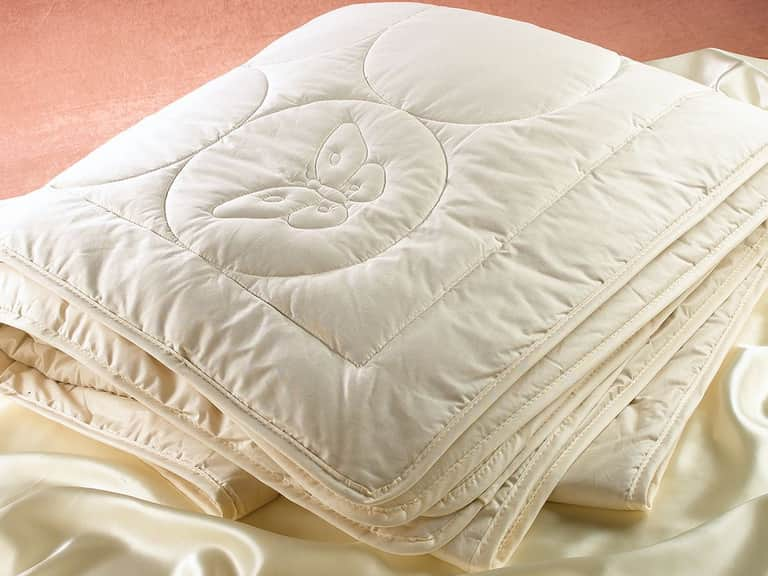
The Sleep and Beyond myMerino comforter is described as being hand-filled with certified organic superfine merino wool fiber and encased in organic cotton sateen. The cotton cover gives the wool a smooth textile surface, while the wool itself provides the comforter’s insulating layer. Its construction includes quilting intended to help keep the batting from shifting around inside the cover.
The lighter-weight myMerino version is intended for people who prefer a less substantial layer, including those who sleep warm or want a comforter for warmer seasons. Product information lists a wool fill weight of six ounces per square yard for this light version. That figure can help when comparing different weights, but it cannot tell you exactly how warm the comforter will feel in your bedroom; room temperature, cover choices, and individual comfort all matter.
The brand also describes the comforter as breathable and moisture-wicking, and notes that wool can absorb substantial moisture before feeling damp. These are useful material characteristics to consider, not a promise that every sleeper will have the same result. As with any comforter, fit and feel are personal: a lighter wool layer may be a good match for one person, while another may prefer a heavier wool fill or a different material altogether.
For readers who want to examine the construction and care information, the Sleep and Beyond myMerino Wool Comforter Light is one example of this lighter merino approach. Reviewing the stated materials and care directions is a useful first step before deciding whether a wool comforter fits your needs.
The duvet-cover advantage
A removable duvet cover is a practical partner for a wool comforter. It creates a washable outer layer between the comforter and everyday skin oils, dust, and spills. Since wool comforters may have specific cleaning limitations, a cover can help reduce how often the filled comforter itself needs attention.
Choose a cover that feels comfortable against your skin and is easy to launder according to its own label. Cotton is a familiar choice, but the best fabric depends on your preferences and bedroom conditions. A cover that feels heavy or traps too much warmth may change the overall experience of a lightweight comforter. Likewise, a cover that is too tight can compress the fill and affect how the comforter lies on the bed.
Secure the cover to the comforter’s ties or loops if the design includes them. This helps reduce bunching and keeps the fill distributed more evenly through the night. If your cover feels as if it is shifting, check that its dimensions are appropriate and that the fastenings are connected before changing the comforter itself.
Wool, silk, and down: three different sleep experiences
Wool is not the only natural fill people consider when looking for breathability or temperature balance. Silk is another lightweight option. A silk comforter often has a supple, fluid drape and can feel less lofty than down. Depending on its construction, it may suit people who want a relatively light layer that moves easily over the body. Care instructions vary, so it is important to check whether a particular silk comforter can be washed, needs professional care, or should be spot-cleaned.
Down is usually the choice to explore if you love loft and want a high warmth-to-weight feel. Its clusters create the familiar puffed-up comforter appearance, and different fill weights allow for seasonal options. Down construction, fill power, and baffle design affect performance, so “down” alone does not tell the whole story. Some sleepers find down wonderfully airy; others may prefer wool’s flatter profile or a non-down alternative.
Wool occupies its own middle ground. It can supply insulation while feeling less cloudlike than down, and its moisture-handling qualities are part of its appeal. But it is not automatically cooler than every down or silk comforter. A summer-weight wool layer can feel warmer than a lightweight silk one in one setting, while a suitable wool comforter may feel more comfortable than a lofty down option in another. Weight, bedroom temperature, and the person using it are central to the comparison.
Rather than searching for a universal winner, ask what you want the bedding to feel like. Do you prefer a crisp, light layer, a warm cocoon, or a breathable covering with a little more substance? That answer often narrows the options more effectively than a material label alone.
What to consider before choosing a wool comforter
Before choosing merino wool bedding, think through a few everyday details. These are the questions that can turn an appealing description into a more confident decision:
- Your usual temperature: If you often kick off your covers, a light or summer-weight option may be more appropriate than a winter-weight fill.
- Your bedroom climate: A warm, humid room can make any insulating layer feel uncomfortable. Consider ventilation and the overall bedding stack as well as the comforter.
- Your preferred feel: Wool often has a different drape and profile from lofty down. If possible, learn how the fill weight and quilting are described before choosing.
- Care expectations: Wool products may need gentler handling than everyday washable bedding. Read the manufacturer’s directions and warranty conditions.
- Sensitivity considerations: “Natural” does not mean every material will suit every person. If you have known sensitivities, review the full materials list and consult a clinician when appropriate.
- Layering habits: A light comforter can be paired with a blanket when the weather cools, giving you more flexibility than relying on one very warm layer.
Also check dimensions, construction, and whether the comforter is designed to sit inside a duvet cover. A comfortable fill can still frustrate you if the insert shifts, the cover is awkward to secure, or the size does not suit your mattress and preferred drape.
Caring for merino wool bedding
Wool comforters generally benefit from protection and gentle routine care rather than frequent washing. Follow the care label for the specific comforter, because instructions can differ between products and constructions. The Sleep and Beyond myMerino guidance recommends using a removable duvet cover, spot-cleaning minor marks on the cotton cover, and allowing the comforter to dry completely before returning it to use.
Air and sun exposure may be recommended for refreshing wool bedding, but follow the manufacturer’s directions about how often and under what conditions. Avoid assuming that every wool comforter can go in a household washer. Agitation, excess moisture, unsuitable detergent, or incomplete drying can damage the batting or affect how the comforter performs. If a major stain reaches the filled comforter, professional care may be a safer choice than improvising at home.
When the comforter is not in use, store it clean and completely dry in a breathable fabric bag or cupboard. Avoid sealing natural bedding in plastic for long periods, since trapped moisture can create problems. Keeping the duvet cover fresh and airing the comforter as directed are simple ways to help maintain a pleasant sleep environment.
A calmer way to think about nighttime comfort
Choosing a comforter is not about finding a fiber that can override the body or the bedroom. It is about finding a layer that works with your own warmth preferences. Wool’s particular appeal is its combination of insulation, a less lofty feel than many down comforters, and the capacity to absorb and gradually release moisture vapor. For some sleepers, that combination feels like just the right balance.
Sleep and Beyond’s myMerino comforter makes those qualities tangible through organic merino wool fill, an organic cotton cover, and a lighter-weight option. It may be worth exploring if you want a natural fill, tend to feel damp or overheated under heavier bedding, or simply prefer a more settled drape than a lofty down insert. Your room temperature and layering choices will still shape the outcome, and care requirements deserve attention before you commit.
There is no single ideal comforter for every sleeper. But if your nights are marked by a familiar cycle of warmth, clamminess, and uncovering, considering the material beneath the duvet cover is a thoughtful place to begin. A breathable wool layer may not transform every night, but it can offer a different—and potentially more comfortable—way to settle in.
The short version
Wool comforters are worth considering if you want natural insulation with a less lofty feel than down. Wool can absorb moisture vapor and release it gradually, but comfort depends on fill weight, room conditions, covers, and personal preference. A removable duvet cover can help protect a wool comforter, while careful attention to its care label can help preserve the fill and construction over time.